
Made-in-China.com B2B Trade
Focus Technology Co., Ltd.Shopping
4.71.06K Reviews
- Version
- 8.00.09
- Installs
- 10.00M
- Age Rating
- Mature 17+
Screenshots
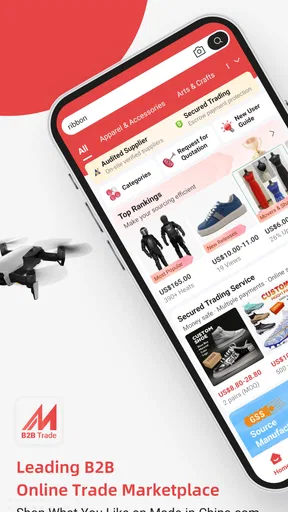
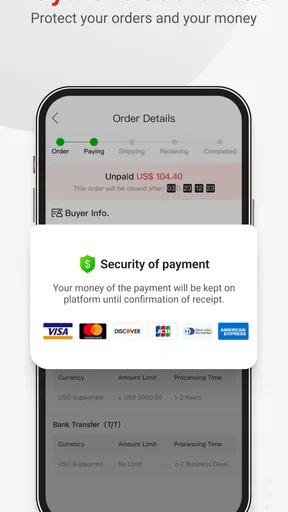
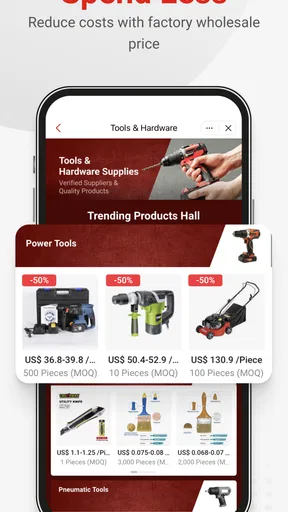
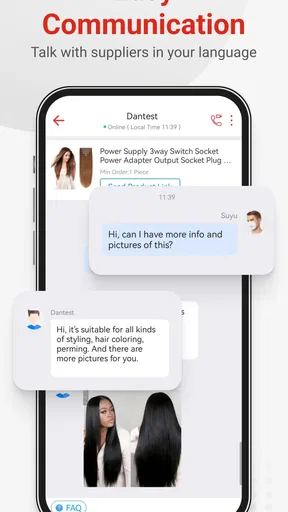
Our Review of Made-in-China.com B2B Trade
 Analysis by Appyee
I approached Made-in-China.com as a shopping app for a very specific purpose: finding products from Chinese suppliers and exploring wholesale opportunities rather than filling a casual retail basket. That distinction matters immediately. This is not the kind of app I would open when I need one household item delivered quickly. It is more useful when I am comparing product ideas, looking for manufacturers, or trying to understand what is available in the global B2B market.
The app is free, belongs to the Shopping category, and is developed by Focus Technology Co., Ltd. Its store presence is substantial, with more than ten million installs and an average rating of 4.7 from roughly one hundred five thousand ratings. Those figures suggest that it has reached a broad audience, but they do not change the basic learning curve: wholesale shopping requires more attention than ordinary consumer shopping.
What the app feels like in everyday use
My first impression is that the app is built around discovery and supplier research. Product browsing is the central activity, but the real value comes from looking beyond a single item. I can imagine using it to compare several versions of a product, inspect supplier information, and decide whether an idea is worth pursuing before contacting a business.
A realistic example would be a small online seller preparing for a new product line. Instead of buying the first attractive item found through a normal retail marketplace, the seller could use this app to examine different product categories, compare wholesale-oriented offers, and shortlist suppliers. That process is slower than consumer shopping, but it can reveal options that are easy to miss on mainstream retail apps.
The app is also relevant to importers, shop owners, sourcing agents, and people testing a business concept. Someone who only wants a single low-cost purchase may find the experience unnecessarily involved. The platform makes more sense when the product search is connected to a larger decision: what to stock, whom to contact, and whether an item appears suitable for international trade.
Speed is more about browsing habits than instant checkout
In my experience, the perceived speed of a B2B marketplace depends heavily on how narrowly I search. A focused search can feel efficient because it moves me toward comparable products, while broad browsing quickly becomes a research session with many decisions. That is not necessarily a flaw, but it means I would not judge this app by the same standard as a simple grocery or fashion app.
For faster results, I would begin with a precise product phrase rather than a vague category. I would also keep a short list of requirements before opening the app: target material, approximate order size, intended market, and any packaging needs. This prevents the common mistake of saving attractive products that later turn out to be unsuitable for the actual business.
One useful workflow is to separate discovery from evaluation. During the first pass, I would save or note promising listings without trying to make a final decision. On the second pass, I would compare supplier details, product variations, and trade conditions. This approach reduces the temptation to choose based only on photographs or the lowest visible price.
The app’s free price makes experimentation easy. I can install it and investigate a category without committing money at the start. Still, free access should not be confused with a risk-free purchase process. The financial and logistical questions begin after product discovery, especially when an order involves quantities, shipping, customs, quality expectations, or communication with a supplier.
Where heavier use can become demanding
The most demanding moments are likely to come during extended comparison sessions. Looking through many supplier offers, opening product pages, switching between categories, and keeping track of several possibilities can make the experience feel mentally heavy even when the app itself is responding normally. B2B shopping creates information overload more easily than ordinary retail shopping because the cheapest option is rarely the only relevant option.
I would avoid making a sourcing decision while casually scrolling on a phone. A better method is to use the app for initial research, then write down the important differences in a separate note. Useful fields include minimum order expectations, customization possibilities, packaging, shipping questions, and whether the supplier appears suitable for the destination market. That small habit turns the app from a product gallery into a practical sourcing tool.
Another non-obvious trade-off is the difference between product variety and decision confidence. A large selection is helpful when I am still exploring, but it can slow me down once I have a clear target. In that situation, I would limit the search to a small group of candidates and evaluate them consistently rather than continually opening new listings.
For a business owner, the app is strongest at the top of the funnel: identifying possibilities and finding suppliers to investigate. It is less likely to replace every later step of procurement. I would still verify samples, specifications, shipping arrangements, and commercial terms through the appropriate communication and documentation before placing a significant order.
Reliability means checking the transaction, not just the app
The app’s strong average rating and large install base give me confidence that it is an established shopping platform rather than an obscure experiment. The current version is 8.00.09, which indicates an actively maintained product line. I also appreciate that the developer is clearly identified as Focus Technology Co., Ltd., giving users a recognizable company name to associate with the service.
However, app reliability and supplier reliability are two different questions. A stable browsing experience does not automatically guarantee that every listing, product description, delivery estimate, or business relationship will meet my expectations. That is the most important distinction I would want a new user to understand before treating the platform as a complete purchasing solution.
I would approach each supplier with the same discipline I would use outside the app. I would compare descriptions carefully, ask direct questions when specifications are unclear, and avoid assuming that photographs show every relevant detail. If the product will be resold, I would pay particular attention to labeling, packaging, electrical requirements, materials, and compliance expectations for the destination country.
The app’s mature age rating of 17+ is another reason I would treat it as a serious commercial marketplace rather than a casual shopping toy. That rating does not tell me whether a particular supplier is appropriate, but it reinforces the idea that users should make informed decisions about trade, payments, and imported goods.
Recovery after interruptions and incomplete research
Researching products is rarely a single uninterrupted task. I might begin on a commute, continue at home, and return a day later after checking market demand. For that reason, I would use a simple external record of promising products and suppliers instead of relying entirely on memory. Product names, screenshots, questions, and comparison notes are more valuable than repeatedly starting the search from the beginning.
This is especially important when a category contains many similar offers. A listing that looks ideal at noon may be difficult to identify again later if I have not recorded what made it interesting. Keeping a shortlist also helps me recover from distractions, connection problems, or an accidental change of search terms without losing the reasoning behind my earlier choices.
I would also divide a large sourcing project into small sessions. One session could focus on discovering products, another on comparing suppliers, and a later one on preparing questions. That approach is kinder to the phone and to my attention. It also reduces the chance of making a rushed purchase simply because I have spent too long browsing.
Device expectations and practical limits
The app supports devices running Android 7.0 or later, which covers a wide range of Android phones. That broad compatibility is useful for users who do not have a recent flagship device. Still, compatibility alone does not tell me how comfortable a long sourcing session will feel on every phone. Screen size, available storage, connection quality, and general device condition can all affect the experience.
On a smaller or older phone, I would expect detailed product comparison to be less comfortable than on a larger screen. Reading specifications, reviewing images, and switching between several candidates can become tiring. If I were doing serious procurement work, I would use the phone for quick checks and discovery, then move my notes and final evaluation to a more spacious setup whenever possible.
Resource demands also depend on the way I use it. A brief product search is a light task compared with prolonged browsing through image-heavy listings. I would not keep many unrelated apps active during an extended session on an older device, particularly if the phone already struggles with multitasking. That is practical housekeeping rather than a claim about a specific memory requirement.
Connection quality matters just as much as device age. Supplier research often involves images and detailed pages, so an unstable connection can make the app feel slower and can interrupt the comparison process. When the network is unreliable, I would avoid making a final judgment about a supplier based on a partially loaded page.
Who will get the most value
I think this app is a good fit for a person who wants to explore wholesale products from Chinese suppliers, especially when the search is part of a business plan. It can help a small retailer investigate new inventory, a startup test possible product directions, or an importer build an initial supplier shortlist. The free entry point is helpful because research can begin before a purchasing budget is finalized.
It is also useful for users who enjoy comparing options rather than choosing the first result. The strongest results will come from people willing to read details, ask questions, and verify practical conditions. In other words, the app rewards patience and organization more than impulse.
I would recommend skipping it if the goal is a fast, familiar retail purchase with simple returns and minimal research. A conventional consumer marketplace will usually be more convenient for buying one item for personal use. This app is aimed at a different moment in the shopping journey: finding supply, evaluating possibilities, and thinking about trade at a broader scale.
How it compares with ordinary shopping alternatives
Compared with a typical retail marketplace, Made-in-China.com feels more business-oriented. Retail apps usually optimize for quick product selection, clear consumer pricing, and a short path to checkout. Here, the important question is often not “Which item should I buy now?” but “Which supplier and product deserve further investigation?” That makes the app more valuable for sourcing than for everyday personal shopping.
Compared with searching the open web, the advantage is concentration. A dedicated B2B marketplace gives me a more relevant starting point than a general search engine when I already know I want Chinese suppliers or wholesale-oriented products. The trade-off is that I still need to perform my own due diligence; a specialized marketplace narrows the search, but it does not remove the need for judgment.
Compared with contacting manufacturers one by one without a marketplace, the app can make early discovery less scattered. I can explore several possibilities before deciding where to spend time on direct questions. For a first sourcing project, that can be a meaningful advantage. For an established buyer with trusted supplier relationships, the app may be more useful for finding alternatives than for replacing an existing procurement system.
My practical method for using it
I would begin by defining the product in business terms, not just visual terms. Instead of searching for something broad, I would specify the intended use, customer, approximate quantity, and any technical requirements. Then I would review several listings and look for differences that affect the real cost or resale potential.
Next, I would create a shortlist rather than contacting every supplier I see. My questions would be concise and specific: What are the available specifications? Is customization possible? What packaging is used? What information is needed to estimate shipping? Are there product documents relevant to my market? Clear questions make supplier replies easier to compare.
Before committing, I would calculate the complete landed cost rather than focusing on the displayed product price. Shipping, taxes, customs, packaging, inspection, and possible defects can change the economics of a deal. This is one of the biggest practical differences between using this app for business and using a normal retail app for personal shopping.
Finally, I would treat a sample or small initial order as a learning step where appropriate, not as proof that every future order will be identical. Product quality, packaging, and communication should be evaluated in the context of the actual business need. The app can support that process, but the responsibility for the final commercial decision remains with me.
My performance verdict
Made-in-China.com is a focused tool for wholesale discovery and global supplier research. Its broad reach, free access, established presence, and compatibility with Android 7.0 or later make it approachable for many users. I found its value less in instant shopping and more in helping me organize the early stages of a sourcing decision.
The experience can feel demanding during long comparison sessions, particularly on a small or older phone, and the amount of choice requires discipline. I would not use it as a shortcut around supplier checks, shipping calculations, or product verification. Those limitations are important, but they are also part of the reality of B2B purchasing rather than failures unique to the app.
My recommendation is straightforward: if you are looking for Chinese suppliers, wholesale products, or ideas for a new inventory line, this app is worth trying. Use it as a research and shortlist-building workspace, keep careful notes, and verify the commercial details before paying. If you simply want a quick personal purchase, a conventional retail app will probably feel faster and easier.
Overall, I see Made-in-China.com as a useful starting point for serious product exploration. It does not remove the work involved in international trade, but it can make the first part of that work more organized and accessible. For supplier discovery rather than impulse shopping, it is a convincing choice.
Verdict
Strengths of Made-in-China.com B2B Trade
- Connects buyers with a wide range of verified Chinese suppliers.
- Supports bulk purchasing and custom product sourcing.
- Supplier profiles include business details and product catalogs.
- In-app messaging makes negotiating with sellers convenient.
- Useful for comparing prices, minimum orders, and product options.
Limitations of Made-in-China.com B2B Trade
- Many listings require high minimum order quantities.
- Product quality can vary between suppliers and factories.
- Shipping costs and import duties may raise the final price.
- Some sellers may respond slowly due to time-zone differences.
- The interface can feel crowded because of the large product catalog.
Similar Picks in This Category
View All
SHEIN-Shopping Online
Roadget Business PTE. LTD.4.8

Amazon Shopping
Amazon Mobile LLC4.4


Mercado Libre: Compras online
Mercado Libre4.8

Wish: Shop and Save
Wish US Holdings LLC4.7

Alibaba.com - B2B marketplace
Alibaba Mobile4.4
Frequently Asked Questions
What is Made-in-China.com B2B Trade used for?
Made-in-China.com B2B Trade is a marketplace app for discovering products and connecting with suppliers, manufacturers, and wholesalers, mainly in China. During our review, it was useful for browsing categories, comparing product listings, contacting sellers, and requesting quotations. It is designed more for business sourcing and international purchasing than for casual shopping or buying a single consumer item.
Can I buy products directly through the Made-in-China.com app?
The app lets you explore products, communicate with suppliers, and begin the purchasing process, but the exact buying experience depends on the seller and listing. Some suppliers may provide quotations, minimum order quantities, shipping details, and payment arrangements through the platform, while others may complete parts of the transaction separately. Always confirm specifications, prices, delivery terms, and payment protection before ordering.
Is Made-in-China.com B2B Trade suitable for small businesses or individual buyers?
Small businesses can benefit from the app because it provides access to manufacturers and wholesale suppliers across many categories. However, users should pay attention to minimum order quantities, customization requirements, sample policies, and international shipping costs. Individual buyers may find that some listings are not practical for personal purchases, since many suppliers focus on bulk orders, private labeling, or commercial procurement.
How can I check whether a supplier on Made-in-China.com is trustworthy?
Before placing an order, review the supplier’s company profile, years of operation, certifications, product information, customer feedback, and available verification badges. Contact the supplier with specific questions and request samples, updated quotations, production timelines, and clear shipping terms. Avoid relying only on attractive prices, and use safer payment or escrow options when available rather than sending money through unverified channels.
Does Made-in-China.com support international shipping and communication?
Made-in-China.com is built for international B2B sourcing, so many listings include export information and suppliers accustomed to working with overseas buyers. Communication tools can help users send inquiries and discuss products, quantities, customization, and logistics. Nevertheless, shipping availability, import duties, customs clearance, delivery times, and payment methods vary by supplier and destination, so these details should be confirmed before committing to a purchase.
